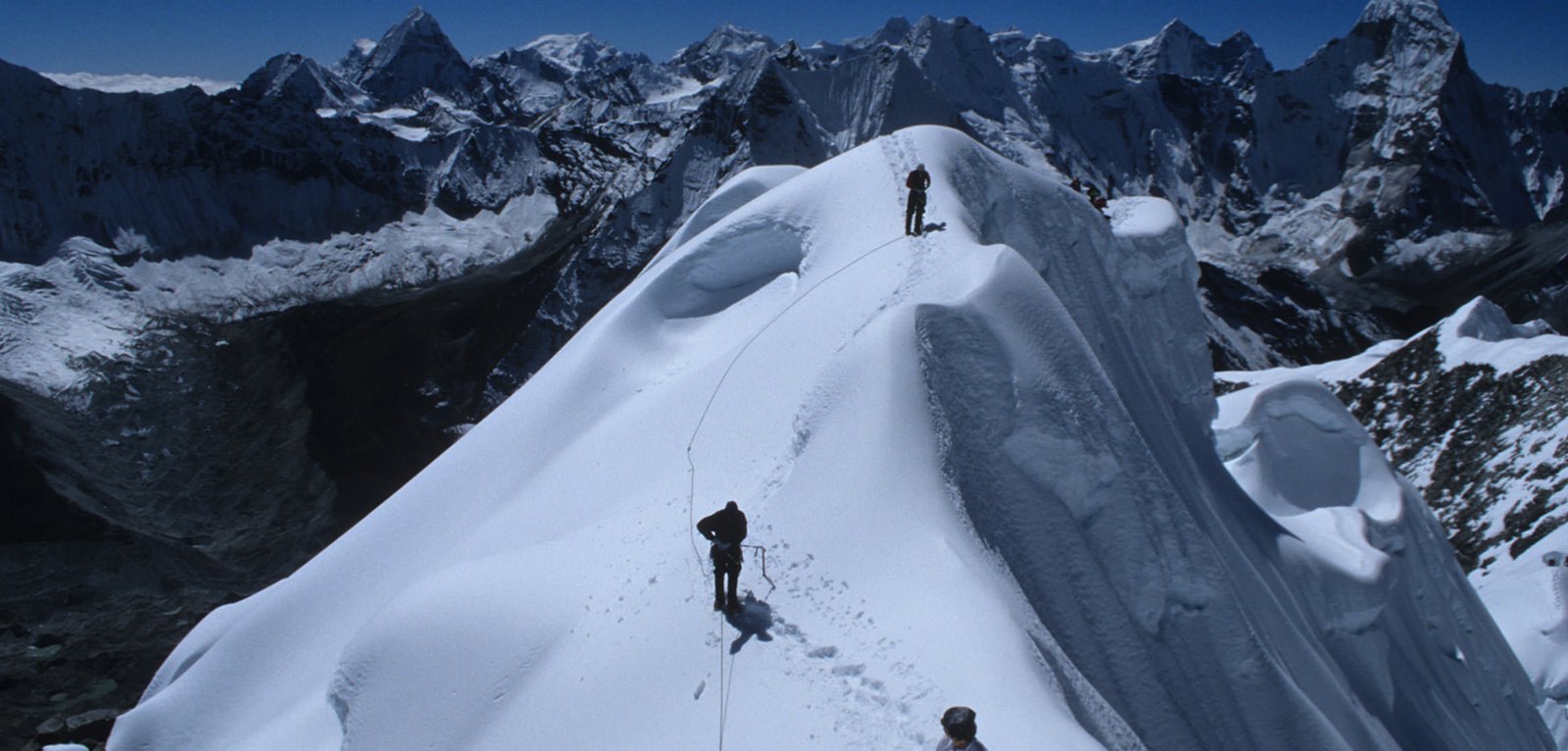
The itinerary is structured with proper acclimatization intervals to maximize summit success and safety. The journey begins and ends at Lukla, home to one of the world’s most famous mountain airstrips.
Key Facts
- Duration: 23 Days (trekking and climbing component approx. 14 days)
- Difficulty: Challenging, but achievable for beginners with good fitness
- Start/End Point: Kathmandu, Nepal
- Group Size: 2–15
- Maximum Altitude: 6,160 m (summit)
- Best Seasons: March–April, October–November
Itinerary Highlights
- Day 1: Arrive Kathmandu
- Day 2: Explore Kathmandu, trek briefing
- Day 3: Fly to Lukla, trek to Phakding
- Day 4: Trek to Namche Bazaar
- Day 5: Rest and acclimatization in Namche Bazaar
- Day 6: Trek to Tengboche
- Day 7: Trek to Dingboche
- Day 8: Acclimatization day in Dingboche
- Day 9: Trek to Chhukung, meet climbing guide
- Day 10: Trek to Island Peak Base Camp
- Day 11: Climb to Island Peak High Camp
- Day 12: Island Peak summit and descend to Chhukung
- Day 13: Trek to Khumjung
- Day 14: Trek to Namche Bazaar
- Day 15: Trek to Lukla
- Day 16: Fly to Kathmandu
- Day 17–23: Reserved for logistics, cultural exploration, or contingency
Inclusions
- Airport transfers in private vehicle
- 13 days lodge/camp trek full board (breakfast, lunch, dinner with tea/coffee)
- Kathmandu–Lukla–Kathmandu airfare and domestic airport transfers
- Trek and peak climbing permit fees
- Insurance and equipment allowance for climbing sherpa and staff
- Guides’ airfare and logistics
- All climbing equipment: ropes, ice axe, crowbar, etc.
- Applicable government taxes
Exclusions
- International flights and Nepal entry visa fee
- Accommodation, lunch, and dinner in Kathmandu
- Alcohol/soft drinks, personal expenses, museum/monastery entrance fees
- Trekking or climbing gear rental or purchase, hot shower and hot water on trek
- Insurance and emergency rescue
- Any items not explicitly listed in the inclusions
Climbing Experience
The summit day involves an early alpine start, glacier travel, and the application of mountaineering techniques such as using ropes and crampons on 40–45 degree icy slopes. With the support of experienced guides, climbers traverse crevasses and scale the snow slopes to reach the 6,160 m summit. From the top, panoramic views of Lhotse, Nuptse, Makalu, Ama Dablam, and Baruntse reward the effort.
The itinerary is carefully paced for safety and acclimatization, making Island Peak an ideal first Himalayan summit for those wanting to step into high-altitude mountaineering.